Perplexity AI

0
5 0 Reviews 0 Saved
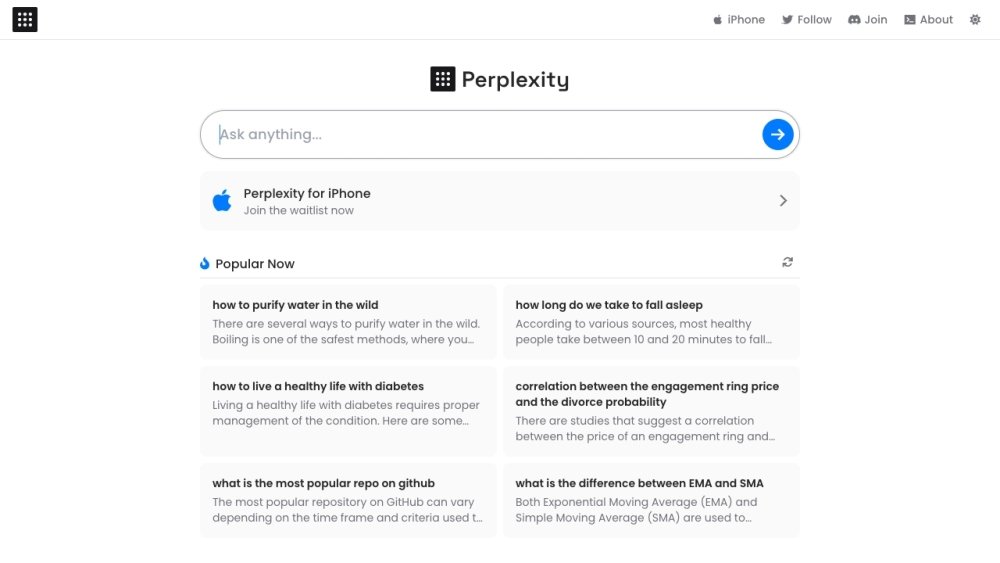
Introduction: Perplexity AI: Perplexity AI is an AI search engine that utilizes large language models (OpenAI API) and search engines to provide answers. It is inspired by OpenAI WebGPT and is designed for information discovery and sharing. It can also answer Twitter graph queries by translating natural language to SQL code.

Perplexity AI Product Information

What is Perplexity AI?

Perplexity AI is a next-generation search engine that uses advanced Large Language Models (LLMs) like GPT-4 and Claude 2 to provide direct answers to your questions. Instead of a list of links, it gives you a summarized, comprehensive response complete with citations to the sources used. It features 'Copilot', an interactive research assistant that asks clarifying questions to tailor the results to your needs. Perplexity can also analyze uploaded files and search specific domains (like Reddit or YouTube).

How to use Perplexity AI?

### How to Use Perplexity AI
1. **Ask a Question**: Type your query in natural language.
2. **Interact**: Answer any clarifying questions from Copilot to refine the search.
3. **Read & Verify**: Read the summarized answer and click citations to verify facts.
4. **Follow Up**: Ask follow-up questions to retain context and dive deeper.

Perplexity AI Use Cases

#1 "### Top Use Cases\n- **Deep Research**: Understand complex topics quickly with synthesized summaries.\n- **Academic Work**: Find sources and get explanations for difficult concepts.\n- **Coding Help**: Get code snippets and explanations for programming queries.\n- **News Analysis**: Get up-to-date summaries of current events from multiple sources."

Related Model Comparison Pages

Use these comparison pages to understand the trade-offs between the models most relevant to Perplexity AI.

Compare GPT 5.4 and GPT 5.4 Pro across pricing, context window, capabilities, benchmarks, and API access to choose the better fit for long-context workloads versus long-context workloads.

Compare GPT 5.5 and GPT 5.4 across pricing, context window, capabilities, benchmarks, and API access to choose the better fit for long-context workloads versus long-context workloads.

Compare GPT 5.5 and Claude 4.6 Opus across pricing, context window, capabilities, benchmarks, and API access to choose the better fit for long-context workloads versus long-context workloads.

Compare GPT 5.5 and Claude 4.6 Sonnet across pricing, context window, capabilities, benchmarks, and API access to choose the better fit for long-context workloads versus long-context workloads.