
1. MiniMax to Showcase M3 Model at AWS Builder Loft
MiniMax said in an official X post: We’re heading to the AWS Builder Loft in SF on June 9 for an evening on open-weight foundation models on Amazon Bedrock. We’ll be showcasing MiniMax M3, including MiniMax Sparse Attention,. MiniMax is positioning M3 as an open-weights frontier model for coding, agentic work, long context, and native multimodal input. The real test is whether developers adopt M3 through APIs, cloud hosts, and coding workflows once the weights and technical report land.
Aitoolsfi Summary:Open-Weights Strategy: MiniMax is positioning its M3 model as a versatile open-weights contender capable of handling complex multimodal inputs and long-context reasoning.
Developer Benchmarking: The integration of Sparse Attention technology aims to challenge existing developer-focused models across rigorous coding and terminal-based performance benchmarks.
Ecosystem Adoption: The move to AWS Bedrock and potential Ollama support will determine if M3 gains the developer traction necessary to challenge incumbent foundation models.
Source: MiniMax
2. Hugging Face Releases Harness-1 Search Agent
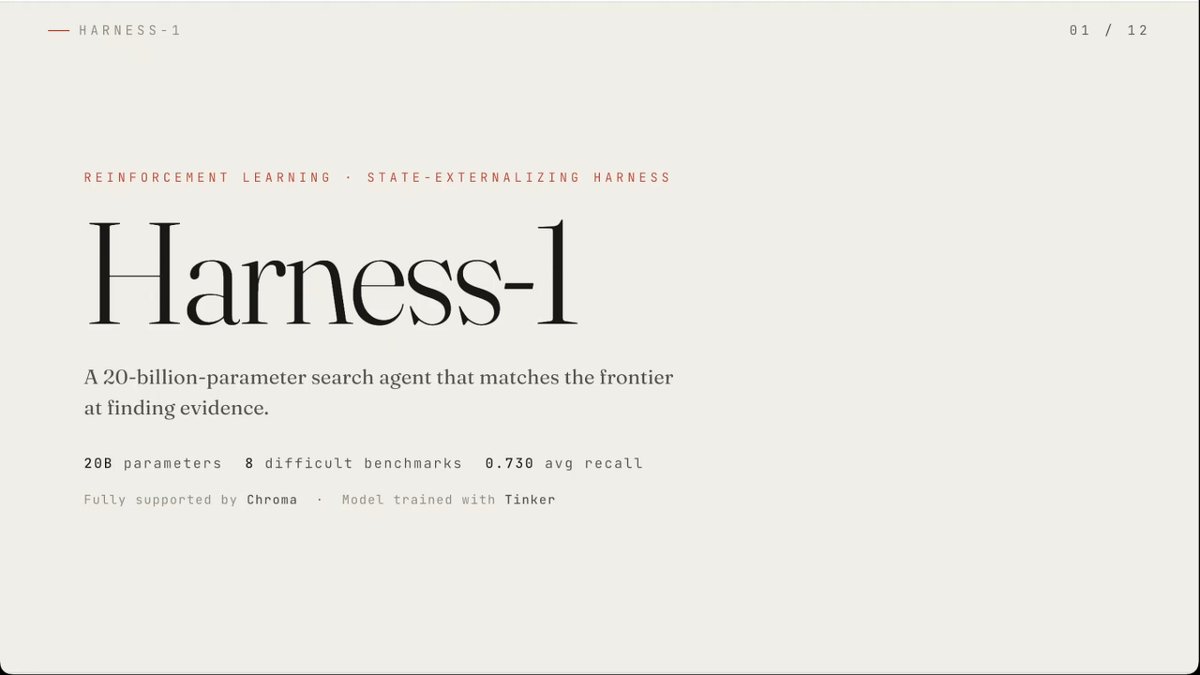
Hugging Face said in an official X post: Introducing Harness-1, a 20B search agent trained with a state-externalizing harness. > frontier-level long-horizon search, rivaling Opus-4.6 and outperforming GPT-5.4 > Context-1-level. Model availability, speed, and migration paths continue to change quickly across the AI stack. Pending updates remain directional signals until official documentation, availability details, or independent confirmation arrive.
Aitoolsfi Summary:Search Breakthrough: Hugging Face is challenging top-tier frontier models by prioritizing long-horizon search capabilities in a compact 20B parameter architecture.
State Externalization: The model utilizes a state-externalizing harness to maintain context depth, effectively bypassing the memory constraints typical of standard transformer architectures.
Performance Benchmarking: This development signals a shift toward specialized search agents that outperform general-purpose models in complex, multi-step information retrieval tasks.
Source: Hugging Face
3. Meta Developing Hatch AI Agent With Monthly Subscription Fee
The Decoder reports: Meta is developing a paid AI agent product called "Hatch" that could cost up to $200 per month. Users describe what they need in simple language, and Hatch builds working tools, schedules. Meta's subscription rollout shows major consumer platforms testing how AI features can fit into paid bundles for creators, businesses, and everyday users. AI is becoming a packaging lever inside broader social, creator, and business subscriptions rather than only a standalone product.

Aitoolsfi Summary:Monetization Pivot: Meta is shifting its AI strategy toward high-margin subscriptions to capture value directly from power users.
Tooling Integration: Hatch functions as a natural language interface that automates complex scheduling and custom software creation for subscribers.
Subscription Bundling: The industry is moving toward embedding specialized AI capabilities into premium tiers rather than keeping them as free platform features.
Source: The Decoder
4. SpaceX Leases AI Chip Capacity to Google for $920 Million
The Decoder reports: SpaceX is leasing AI computing capacity to Google for $920 million per month, according to an SEC filing. The deal gives Google access to about 110,000 Nvidia chips to meet demand for its G. Google's Nano Banana models moving into AI Studio and Gemini Enterprise makes image generation more directly available to developers and businesses. Image generation is becoming a platform feature inside enterprise agent stacks rather than a separate consumer-facing novelty.

Aitoolsfi Summary:Compute Arbitrage: SpaceX is pivoting its massive Nvidia hardware stockpile into a high-revenue infrastructure play for Google’s expanding model demands.
Infrastructure Integration: The deal leverages SpaceX’s existing GPU clusters to bypass traditional data center supply constraints for Google’s G-series model training.
Hardware Scarcity: This partnership signals a shift where non-traditional tech firms become critical compute landlords in the race for frontier model dominance.
Source: The Decoder
5. Sriram Krishnan to launch new institution for AI policy
TechCrunch reports: Krishnan is reportedly starting a new institution to continue shaping Trump's AI policy. Open model and tooling updates are shaping how developers adopt and deploy AI systems. Pending updates remain directional signals until official documentation, availability details, or independent confirmation arrive.

Aitoolsfi Summary:Policy Institutionalization: Sriram Krishnan is formalizing his influence on federal AI strategy by establishing a dedicated policy-focused organization.
Strategic Alignment: The new entity will likely serve as a bridge between Silicon Valley leadership and the incoming administration's regulatory agenda.
Regulatory Trajectory: This move signals a shift toward industry-led policy frameworks that could prioritize rapid model deployment over restrictive oversight.
Source: TechCrunch
Summary
MiniMax, Hugging Face, Meta, and Google show a market moving past novelty and into operational pressure. The most important AI updates now sit around deployment boundaries: who can access a model, which tools an agent can call, how performance is measured in real tasks, and whether the business case is strong enough to justify production use.