

1. Google Releases Gemini Omni Flash to Developers and Enterprise
Google DeepMind said in an official X post: Google Releases Gemini Omni Flash to Developers and Enterprise. Google's Nano Banana models moving into AI Studio and Gemini Enterprise makes image generation more directly available to developers and businesses. Image generation is becoming a platform feature inside enterprise agent stacks rather than a separate consumer-facing novelty.
Aitoolsfi Summary:Multimodal Integration: Google is shifting Gemini Omni Flash from experimental status to a core component of its developer and enterprise infrastructure.
Deployment Access: The model now resides within AI Studio and Gemini Enterprise, providing stable API access for high-volume video and graphic processing.
Workflow Evolution: Advanced multimodal reasoning is transitioning from a standalone creative novelty into a standard utility for enterprise-grade production pipelines.
Source: Google DeepMind
2. ModelScope: Introducing Agents-A1, A 35B MoE agentic model built for long-h
ModelScope said in an official X post: ModelScope: Introducing Agents-A1, A 35B MoE agentic model built for long-h. Model availability, speed, and migration paths continue to change quickly across the AI stack. Pending updates remain directional signals until official documentation, availability details, or independent confirmation arrive.
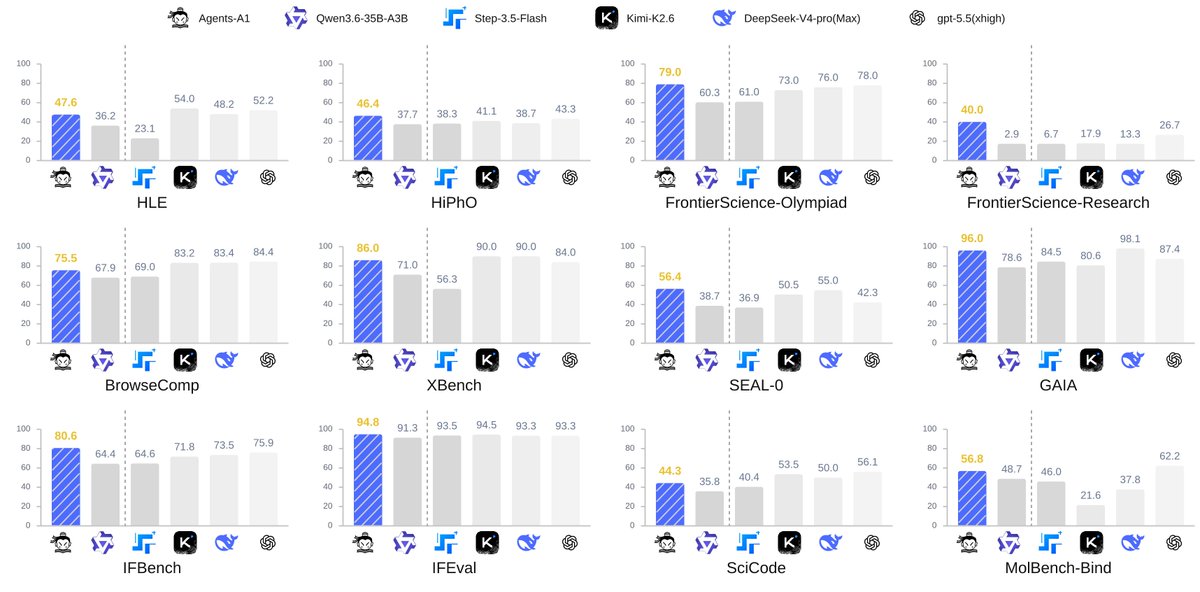
Aitoolsfi Summary:Specialized Architecture: ModelScope is pivoting toward long-horizon task execution by deploying a 35B parameter Mixture-of-Experts model tailored for complex reasoning.
Functional Integration: The model optimizes multi-step workflows by embedding native tool-calling capabilities directly into its architecture for scientific and engineering research.
Performance Validation: The industry shift toward specialized MoE models suggests a move away from general-purpose scaling toward high-utility, domain-specific task completion.
Source: ModelScope
3. Runway Hosts Inaugural AI Summit in San Francisco
Runway said in an official X post: This September, the Runway AI Summit is coming to San Francisco. A daylong gathering bringing together industry leaders across robotics, autonomous vehicles, life sciences, infrastructure. Multimodal systems are moving deeper into video, image, audio, and creative workflows. Pending updates remain directional signals until official documentation, availability details, or independent confirmation arrive.

Aitoolsfi Summary:Strategic Pivot: Runway is shifting its focus from consumer-facing creative tools toward high-stakes industrial applications in robotics and infrastructure.
Cross-Industry Integration: The summit signals an effort to embed generative video models into complex technical pipelines like autonomous vehicle simulation and life sciences.
Enterprise Maturation: This move marks the transition of generative video from a creative novelty into a specialized component of professional engineering workflows.
Source: Runway
4. Hugging Face Buckets Now Support S3 API Integration
Hugging Face said in an official X post: You can now use 100s of tools with Buckets, thanks to the new S3 API! Usually just one or two lines to change. Open model and tooling updates are shaping how developers adopt and deploy AI systems. Pending updates remain directional signals until official documentation, availability details, or independent confirmation arrive.
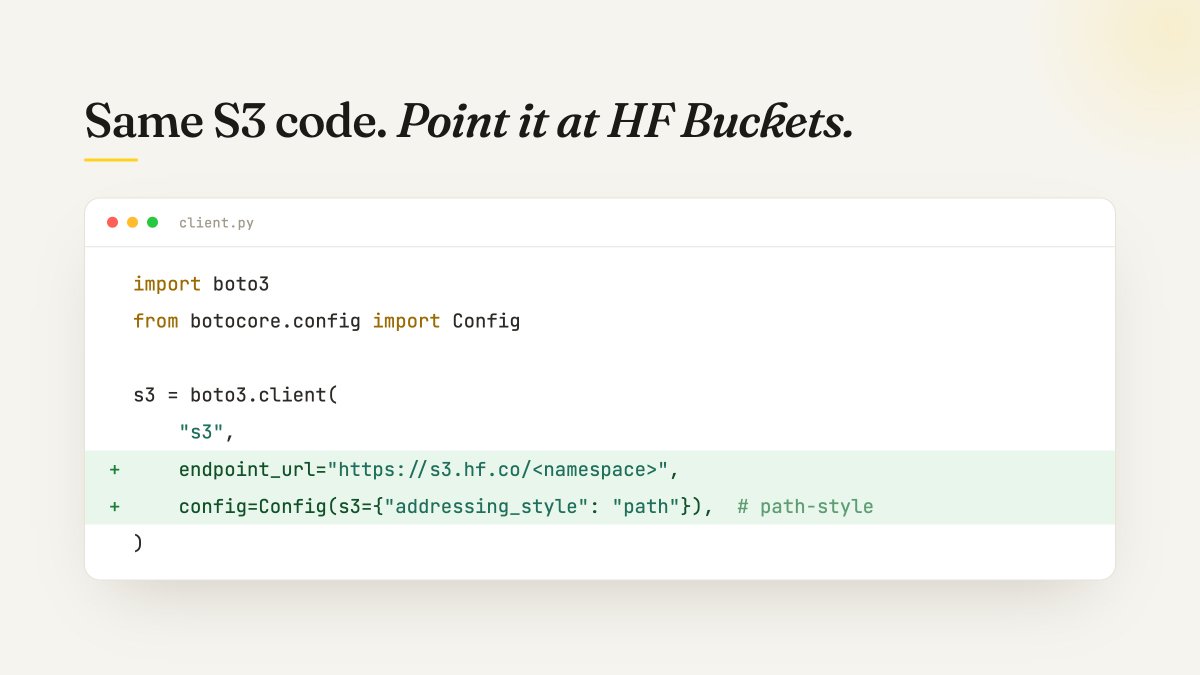
Aitoolsfi Summary:Storage Interoperability: Hugging Face is lowering the barrier for data migration by aligning its storage architecture with standard S3 protocols.
Tooling Compatibility: The update enables developers to connect existing S3-compatible data pipelines and management tools to their Hugging Face buckets with minimal code changes.
Infrastructure Integration: This shift signals a move toward standardized storage backends, making it easier for enterprises to integrate open-source models into established cloud workflows.
Source: Hugging Face
5. Hugging Face Adds S3-Compatible API for Storage Buckets
Hugging Face said in an official X post: Hugging Face Adds S3-Compatible API for Storage Buckets. Open model and tooling updates are shaping how developers adopt and deploy AI systems. Pending updates remain directional signals until official documentation, availability details, or independent confirmation arrive.
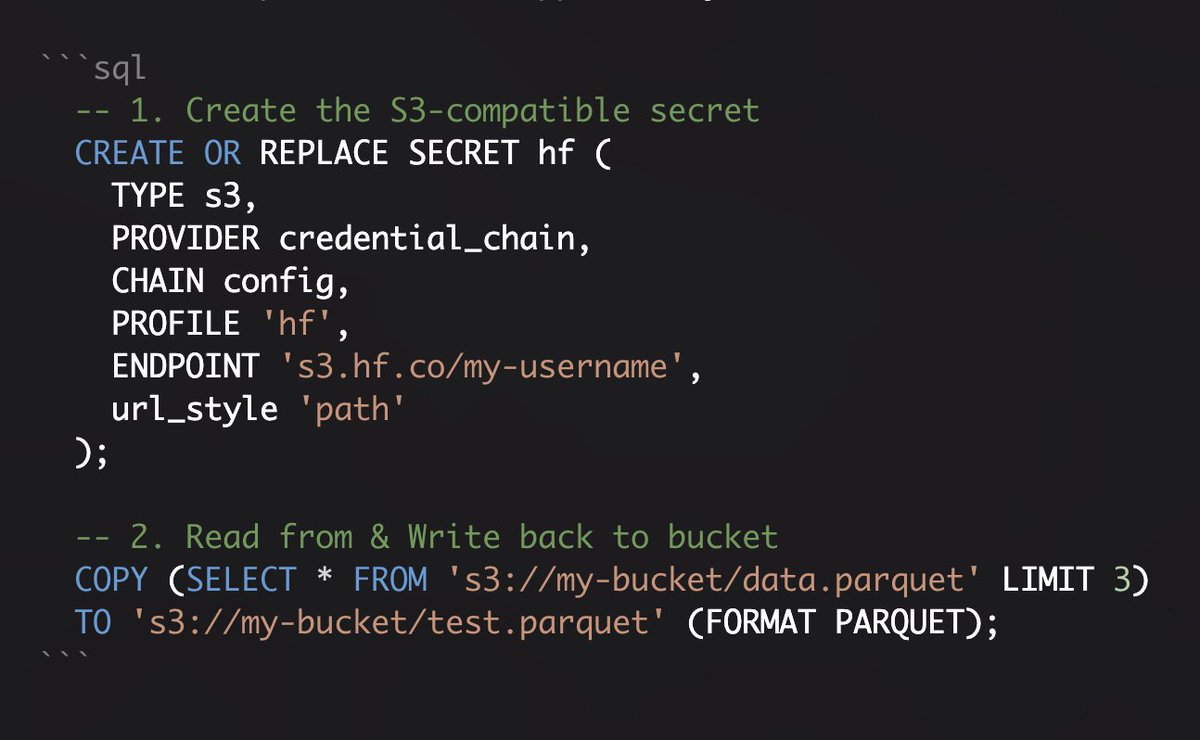
Aitoolsfi Summary:Hugging Face storage Interoperability: Hugging Face is lowering infrastructure friction by adopting the industry-standard S3 protocol for its hosted storage buckets.
Direct Integration: Developers can now bypass custom wrappers to read and write model data directly using standard S3-compatible client tools.
Workflow Consolidation: This shift simplifies MLOps pipelines by allowing Hugging Face to function as a native component within existing cloud-agnostic storage architectures.
Source: Hugging Face
6. SAOT: Self-Supervised Continual Graph Learning with Structure-Aware Optimal Transport
arXiv API published an update: Self-supervised Continual Graph Learning (CGL) aims to successively learn from a graph sequence with different tasks without label supervision - a paradigm that has attracted widespread. Multimodal systems are moving deeper into video, image, audio, and creative workflows. Verified releases are most valuable when they translate into adoption data, technical documentation, or broader customer rollout.
Aitoolsfi Summary:Graph Learning: SAOT enables models to master evolving graph structures sequentially without relying on costly manual label supervision.
Optimal Transport: The framework utilizes structure-aware optimal transport to preserve topological relationships across shifting data sequences.
Dynamic Adaptation: This approach reduces the computational overhead for real-time graph analysis in rapidly changing network environments.
Source: arXiv API
7. Typography-Based Monocular Distance Estimation for Advanced Driver-Assistance Systems
arXiv API published an update: Typography-Based Monocular Distance Estimation for Advanced Driver-Assistance Systems. Multimodal systems are moving deeper into video, image, audio, and creative workflows. Verified releases are most valuable when they translate into adoption data, technical documentation, or broader customer rollout.
Aitoolsfi Summary:Visual Ranging: Computer vision models are shifting toward typography-based cues to calculate precise vehicle distances using single-camera inputs.
Sensor Optimization: The system replaces expensive lidar arrays by extracting spatial depth data directly from the text-based geometry of license plates.
ADAS Efficiency: This low-compute approach lowers the hardware barrier for deploying reliable collision warning systems in budget-friendly vehicle fleets.
Source: arXiv API
Summary
Google, ModelScope, and Hugging Face show a market moving past novelty and into operational pressure. The most important AI updates now sit around deployment boundaries: who can access a model, which tools an agent can call, how performance is measured in real tasks, and whether the business case is strong enough to justify production use.