
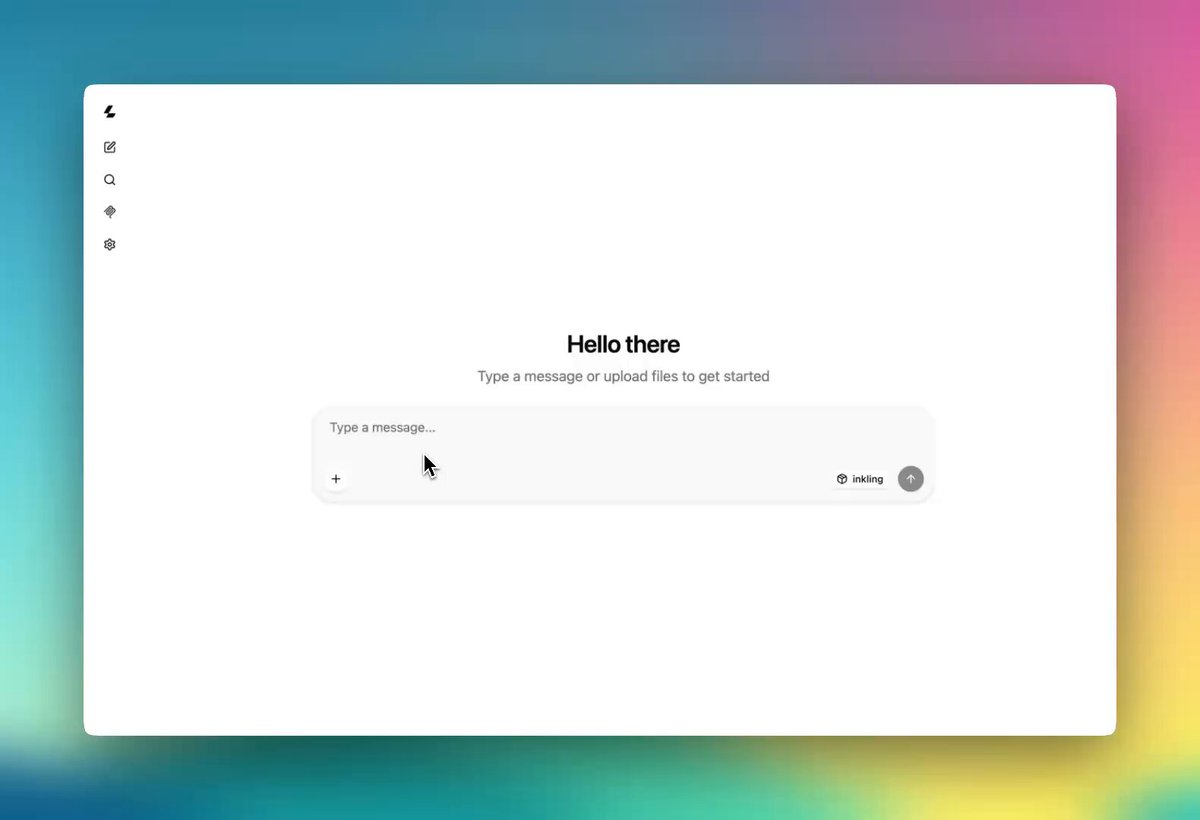
1. ChatGPT Increases Custom Instruction Limits for Paid Users
ChatGPT said in an official X post: Increased custom instruction limits are available now for ChatGPT Plus, Pro, Business, Enterprise, and Education users. Model availability, speed, and migration paths continue to change quickly across the AI stack. Pending updates remain directional signals until official documentation, availability details, or independent confirmation arrive.
Aitoolsfi Summary:Personalization Scaling: OpenAI is prioritizing deeper user-specific context to differentiate its paid tiers from free-tier capabilities.
Instruction Expansion: The update broadens the character capacity for custom instructions across all subscription levels, allowing for more complex behavioral constraints.
Workflow Retention: Increased memory limits signal a shift toward long-term user retention by reducing the need for repetitive prompt engineering.
Source: ChatGPT
2. Hugging Face: Inkling @thinkymachines 1-bit quant by @UnslothAI running 30-40
Hugging Face said in an official X post: Inkling 1-bit quant by running 30-40 TPS video sped up, feel free to jump at the end to check outputs also llama.cpp webui is has reasoning slider, html preview,. The llama.cpp ROCm update improves the local inference path for AMD datacenter GPUs, which matters for teams optimizing non-NVIDIA deployments. Local AI performance work is broadening beyond model releases into hardware-specific inference efficiency.
Aitoolsfi Summary:Extreme Quantization: The Inkling 1-bit quantization demonstrates that massive model compression is now viable for high-speed local inference.
WebUI Integration: The updated llama.cpp interface adds granular reasoning controls and HTML previews to streamline complex model interactions.
Efficiency Threshold: Achieving 30-40 tokens per second on extreme quantization shifts the focus toward deploying large models on consumer-grade hardware.
Source: Hugging Face
3. Qwen: A step-by-step Japanese guide to building a local LLM environme
ModelScope said in an official X post: Qwen: A step-by-step Japanese guide to building a local LLM environme. Model availability, speed, and migration paths continue to change quickly across the AI stack. Pending updates remain directional signals until official documentation, availability details, or independent confirmation arrive.
Aitoolsfi Summary:Local Deployment: ModelScope is prioritizing practical, localized execution paths for Qwen models on consumer-grade Windows hardware.
Hardware Integration: The guide leverages Ryzen AI Max processors to optimize local inference performance for Qwen’s coding capabilities.
Developer Accessibility: This shift toward regional, hardware-specific documentation lowers the barrier for developers building private, high-performance LLM environments.
Source: ModelScope
4. SenseNova-U1-Infographic-V3 Launches Multimodal Infographic Generation Model
ModelScope said in an official X post: SenseNova-U1-Infographic-V3 Launches Multimodal Infographic Generation Model. Model availability, speed, and migration paths continue to change quickly across the AI stack. Pending updates remain directional signals until official documentation, availability details, or independent confirmation arrive.
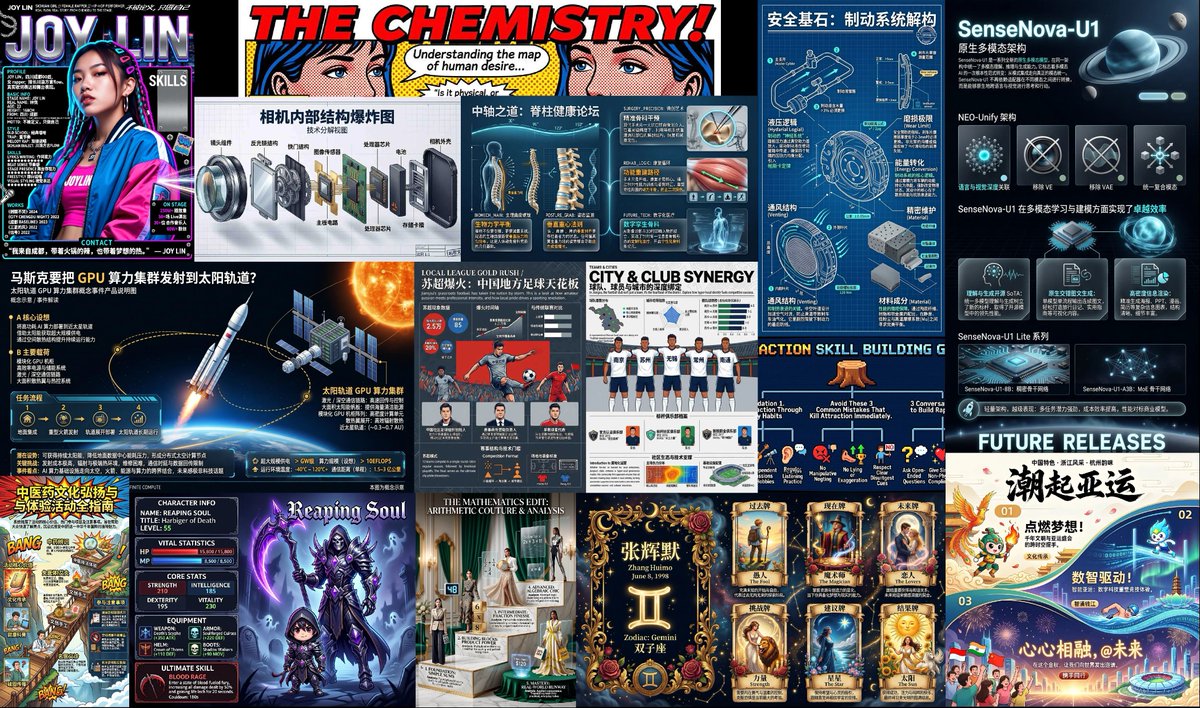
Aitoolsfi Summary:Design Workflow Shift: SenseNova-U1-Infographic-V3 signals a transition from static image generation toward iterative, editable data visualization workflows.
Efficient Architecture: The 8B-MoT model structure optimizes compute resources to handle complex multimodal infographic synthesis within a compact footprint.
Visual Content Velocity: This release accelerates the automation of professional-grade graphics, pressuring traditional design software to integrate generative editing capabilities.
Source: ModelScope
5. MiniMax M3 Launches on Nebius AI Platform
MiniMax said in an official X post: MiniMax M3 is partnering with Nebius, becoming the first open-source model on the platform to launch under a dedicated partnership arrangement. As more enterprises adopt open-sou. MiniMax is positioning M3 as an open-weights frontier model for coding, agentic work, long context, and native multimodal input. The real test is whether developers adopt M3 through APIs, cloud hosts, and coding workflows once the weights and technical report land.
Aitoolsfi Summary:Open-Weights Strategy: MiniMax is positioning M3 as a versatile open-weights model capable of handling complex multimodal inputs and long-context reasoning tasks.
Developer Benchmarking: The integration with Nebius leverages performance claims across SWE-Bench and KernelBench to target the high-stakes developer workflow market.
Platform Adoption: Broad availability through Ollama and cloud hosting will determine if M3 can successfully displace incumbent models in production environments.
Source: MiniMax
6. NVIDIA Nemotron 3 Embed Ranks #1 Overall on RTEB, Advancing Agentic Retrieval
Hugging Face Blog published an update: NVIDIA Nemotron 3 Embed Ranks #1 Overall on RTEB, Advancing Agentic Retrieval. Agent products are moving from demos into real workflows, making permissions, review loops, and accountability more important. Verified releases are most valuable when they translate into adoption data, technical documentation, or broader customer rollout.

Aitoolsfi Summary:Embedding Supremacy: NVIDIA’s Nemotron 3 model now leads the Retrieval-Augmented Generation benchmark, setting a new performance standard for retrieval tasks.
Retrieval Optimization: The model utilizes advanced architectural refinements to improve context accuracy, directly enhancing how systems fetch and process external data.
Search Efficiency: This benchmark dominance signals a shift toward higher-precision retrieval, reducing latency and error rates in complex automated information workflows.
Source: Hugging Face Blog
Summary
Hugging Face, Qwen, and MiniMax show a market moving past novelty and into operational pressure. The most important AI updates now sit around deployment boundaries: who can access a model, which tools an agent can call, how performance is measured in real tasks, and whether the business case is strong enough to justify production use.