
1. Anthropic Leaders Sign Petition to Pace Frontier AI Development
Anthropic said in an official X post: Anthropic Leaders Sign Petition to Pace Frontier AI Development. Research and benchmark updates provide useful signals about the next phase of AI capabilities. Pending updates remain directional signals until official documentation, availability details, or independent confirmation arrive.
Aitoolsfi Summary:Strategic Restraint: Anthropic leadership is signaling a shift toward formalizing development guardrails as internal research highlights the risks of recursive model self-improvement.
Safety Integration: The company is aligning its internal research findings with external policy petitions to standardize how frontier models manage autonomous capability growth.
Industry Precedent: This move sets a directional trend for labs to prioritize systemic stability over raw capability scaling as models approach more complex reasoning thresholds.
Source: Anthropic
2. Anthropic Launches CryptanalysisBench to Evaluate LLM Cryptography Skills
Anthropic said in an official X post: We also worked with academics at ETH Zurich, Tel Aviv University, and the University of Haifa to build CryptanalysisBench, a benchmark for studying LLMs’ cryptanalysis abilities. Research and benchmark updates provide useful signals about the next phase of AI capabilities. Pending updates remain directional signals until official documentation, availability details, or independent confirmation arrive.
Aitoolsfi Summary:Cryptographic Proficiency: Anthropic is shifting focus toward measuring whether LLMs can perform complex cryptanalysis tasks rather than just generating code.
Academic Collaboration: The benchmark integrates specialized datasets from top-tier universities to stress-test model reasoning against established cryptographic challenges.
Security Benchmarking: This initiative signals a move toward standardized security evaluations that could eventually dictate how models are vetted for sensitive data environments.
Source: Anthropic
3. OpenAI Releases Open-Source Codex Security CLI
OpenAI said in an official X post: We quietly released the open-source Codex Security CLI, but Hacker News found it before we had a chance to share it here. You can now use it to scan repositories, track findings across. Agent products are moving from demos into real workflows, making permissions, review loops, and accountability more important. Pending updates remain directional signals until official documentation, availability details, or independent confirmation arrive.
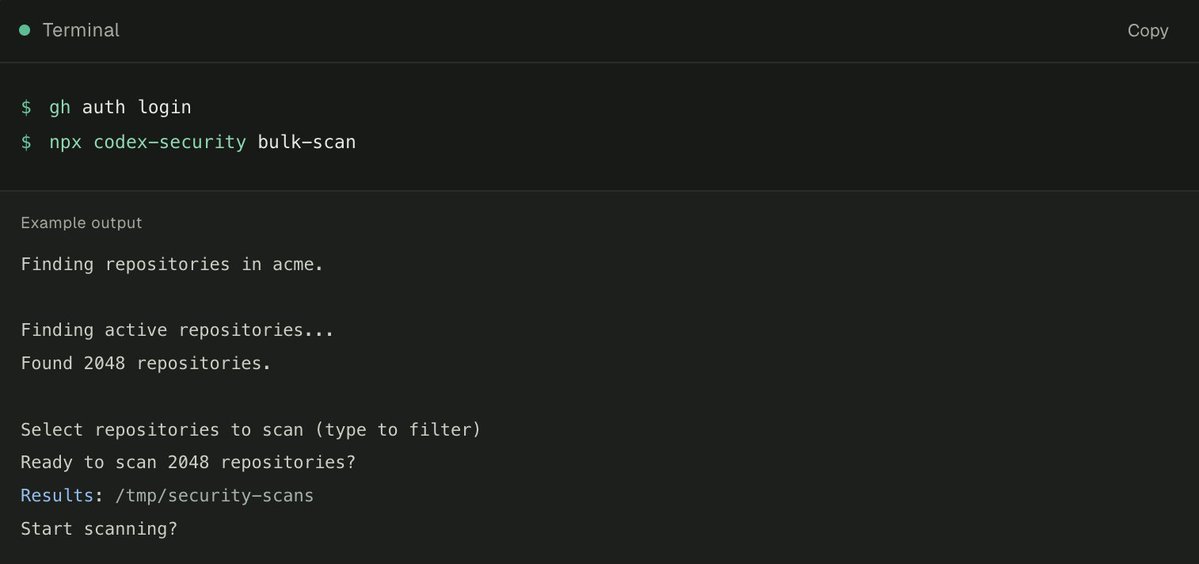
Aitoolsfi Summary:Security Automation: OpenAI is shifting focus toward practical developer tooling by open-sourcing a command-line interface for repository vulnerability scanning.
CLI Integration: The tool enables automated code analysis and findings tracking directly within existing developer terminal workflows and local environments.
DevOps Adoption: This release signals a move toward integrating AI-driven security checks into standard software development lifecycles rather than isolated chat interfaces.
Source: OpenAI
4. OpenAI Releases Open-Source Codex Security CLI
OpenAI said in an official X post: Install the open-source Codex Security CLI,: npm install /codex-security Or start with: npx /codex-security --help NPM:. Agent products are moving from demos into real workflows, making permissions, review loops, and accountability more important. Pending updates remain directional signals until official documentation, availability details, or independent confirmation arrive.
Aitoolsfi Summary:Security Hardening: OpenAI is prioritizing defensive tooling to mitigate risks inherent in automated code generation and execution environments.
OpenAI cLI Integration: The new npm-distributed command line interface enables developers to audit and secure Codex-driven workflows directly within their local terminal.
Developer Adoption: This release signals a shift toward production-grade security standards for AI-assisted coding tools as they move beyond experimental prototypes.
Source: OpenAI
5. OpenAI Employees Call for Pacing Frontier AI Development
OpenAI said in an official X post: At the core of our mission is working through how to ensure increasingly powerful AI benefits everyone. We believe that, at some point in the future, AI acceleration for frontier model. Model availability, speed, and migration paths continue to change quickly across the AI stack. Pending updates remain directional signals until official documentation, availability details, or independent confirmation arrive.
Aitoolsfi Summary:Strategic Pivot: OpenAI is shifting its public narrative toward a more cautious approach regarding the rapid deployment of future frontier models.
Development Pacing: The company is signaling a potential transition from aggressive acceleration to a more measured release cadence for its most powerful systems.
Industry Sentiment: This internal pressure reflects a growing industry tension between maintaining competitive velocity and addressing the long-term risks of advanced AI capabilities.
Source: OpenAI
6. OpenAI Launches Two New Specialized Transcription Models
OpenAI Developers said in an official X post: OpenAI Launches Two New Specialized Transcription Models. Model availability, speed, and migration paths continue to change quickly across the AI stack. Pending updates remain directional signals until official documentation, availability details, or independent confirmation arrive.

Aitoolsfi Summary:Transcription Specialization: OpenAI is shifting its audio strategy by bifurcating model performance into distinct live-stream and batch-processing workflows.
API Architecture: The introduction of GPT-Live-Transcribe and GPT-Transcribe allows developers to select latency-optimized paths directly within the OpenAI API ecosystem.
Market Competition: This move forces specialized transcription providers to compete directly against native, low-latency infrastructure integrated into the primary LLM stack.
Source: OpenAI Developers
7. OpenAI Coding Agents Accelerate Scientific Research
OpenAI said in an official X post: Coding agents are helping scientists spend more time advancing research, taking on everything from routine maintenance and targeted optimization to complete redesigns and new systems. Agent products are moving from demos into real workflows, making permissions, review loops, and accountability more important. Pending updates remain directional signals until official documentation, availability details, or independent confirmation arrive.
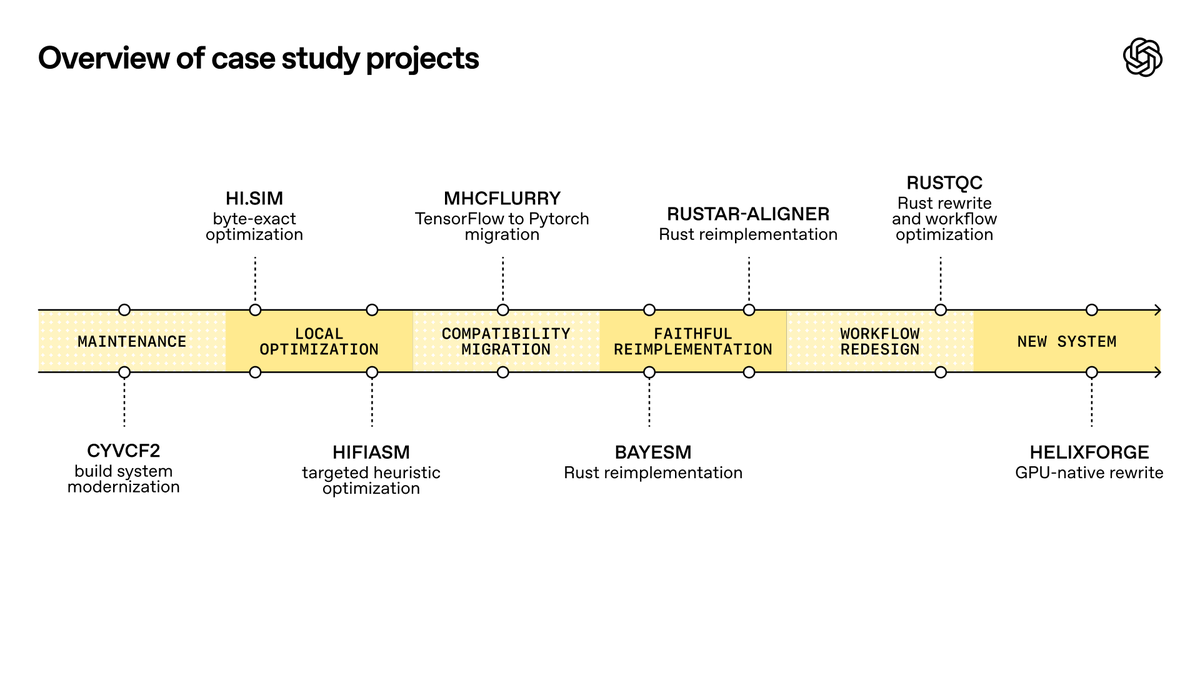
Aitoolsfi Summary:Research Velocity: Automated coding assistants are shifting the scientific bottleneck from manual implementation to high-level hypothesis generation and system architecture.
System Integration: These agents handle routine maintenance and iterative code optimization, allowing researchers to offload technical debt directly to the model pipeline.
Scientific Scaling: The transition from simple code generation to full system redesign signals a shift toward autonomous scientific discovery workflows.
Source: OpenAI
8. ModelScope: Only 3B active parameters, yet SOTA agentic coding performance
ModelScope said in an official X post: ModelScope: Only 3B active parameters, yet SOTA agentic coding performance. The update extends xAI's coding model into another agentic development environment, which keeps competitive pressure on IDE and CLI-based coding assistants. Coding agents are moving into daily engineering environments where trust, context handling, and workflow fit decide adoption.
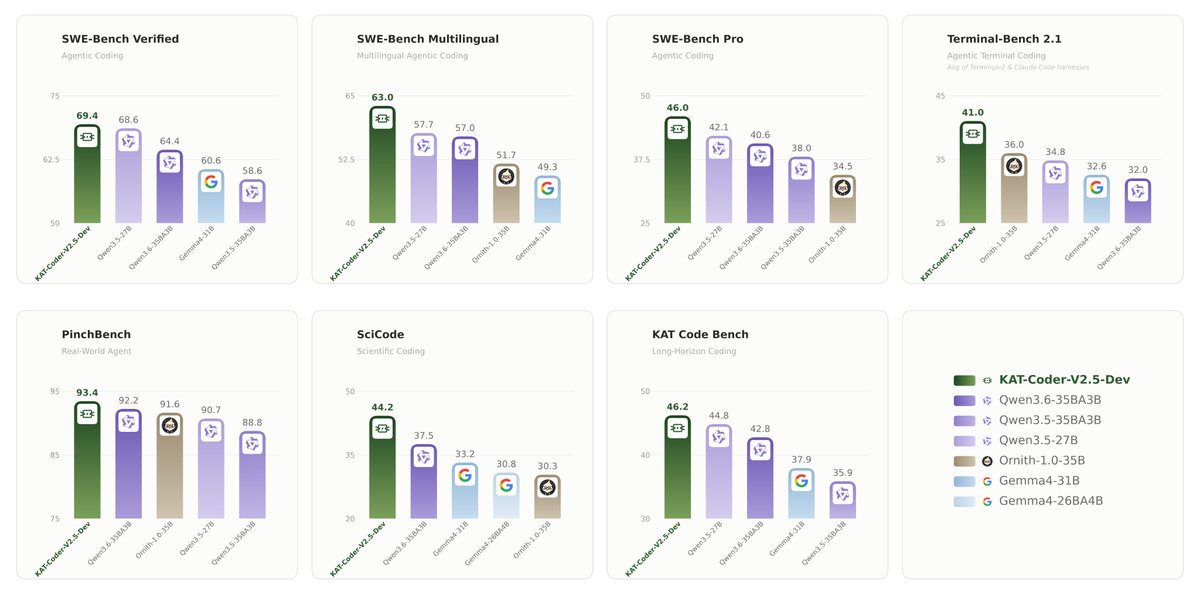
Aitoolsfi Summary:Efficiency Breakthrough: KAT-Coder-V2.5-Dev proves that sparse mixture-of-experts architectures can deliver top-tier coding performance while maintaining a minimal active parameter footprint.
Architecture Scaling: The model utilizes a 35B parameter MoE structure to isolate specialized coding logic, allowing it to execute complex tasks with only 3B parameters active.
Deployment Versatility: This high-performance, low-active-parameter profile lowers the hardware barrier for integrating advanced coding intelligence directly into local development environments.
Source: ModelScope
Summary
Anthropic, OpenAI, and ModelScope show a market moving past novelty and into operational pressure. The most important AI updates now sit around deployment boundaries: who can access a model, which tools an agent can call, how performance is measured in real tasks, and whether the business case is strong enough to justify production use.