

1. Pika MCP powers PantryAgent demo video generation
Pika said in an official X post: 4. PantryAgent: Helps you connect your pantry, meals, and grocery list into one system so all food gets used before it gets thrown out. The team generated their entire demo video with the P. Pika's MCP access makes video generation callable from agent and editor workflows rather than only from a standalone creative interface. Creative AI is moving toward toolchain integration where agents can create media as part of broader production workflows.
Aitoolsfi Summary:Video Capability: Pika is transitioning from a standalone creative tool into a modular service accessible via MCP for automated workflows.
MCP Integration: Standardizing Pika through MCP allows developers to trigger video generation directly from data-driven agent logic and pantry management systems.
Production Shift: Creative generation is evolving from manual prompting into a backend utility for real-time, automated media production.
Source: Pika
2. Hugging Face: open source must win ✊ Video Xenova (@xenovacom) While we eager
Hugging Face said in an official X post: 300tok/s on mobile is insane. open source must win Video Xenova While we eagerly await Fable 5's return, our agentic WebGPU kernel optimization framework kept running. Agent products are moving from demos into real workflows, making permissions, review loops, and accountability more important. Pending updates remain directional signals until official documentation, availability details, or independent confirmation arrive.
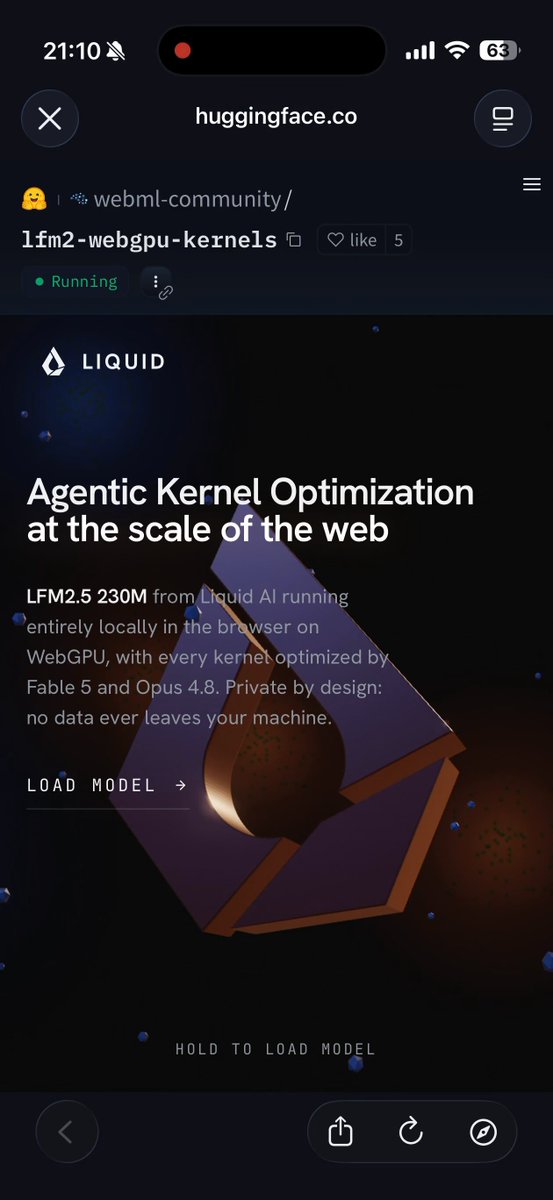
Aitoolsfi Summary:Mobile Performance: Achieving 300 tokens per second on mobile hardware signals a major breakthrough for local, high-speed model inference.
WebGPU Optimization: The framework leverages WebGPU kernel optimizations to bypass traditional bottlenecks and enable complex model execution directly within browser environments.
Local Inference: This performance leap pushes the industry toward a future where sophisticated AI tasks run entirely on-device without cloud dependency.
Source: Hugging Face
3. Hugging Face: Apertus Mini is now running entirely in your browser 80+ tps fo
Hugging Face said in an official X post: Apertus Mini is now running entirely in your browser 80+ tps for the 1.5B, 60+ tps for the 4B (on my M3). Fully client-side via Transformers.js + ONNX + WebGPU. Open model and tooling updates are shaping how developers adopt and deploy AI systems. Pending updates remain directional signals until official documentation, availability details, or independent confirmation arrive.

Aitoolsfi Summary:Browser Performance: Apertus Mini achieves high-speed local inference by shifting compute loads directly to the client-side browser environment.
Technical Stack: The implementation leverages Transformers.js, ONNX, and WebGPU to bypass server-side dependencies for real-time model execution.
Deployment Shift: This capability signals a move toward zero-latency, private AI applications that operate independently of cloud infrastructure costs.
Source: Hugging Face
Summary
Pika and Hugging Face show a market moving past novelty and into operational pressure. The most important AI updates now sit around deployment boundaries: who can access a model, which tools an agent can call, how performance is measured in real tasks, and whether the business case is strong enough to justify production use.