

1. Meta Launches Muse Image and Video Generation Models
Meta AI said in an official X post: Muse Image works as an agent rather than a direct prompt-to-image model: it invokes tools, self-refines, improves with scaled test-time compute, and pairs with Muse Spark for collaborative. Meta's subscription rollout shows major consumer platforms testing how AI features can fit into paid bundles for creators, businesses, and everyday users. AI is becoming a packaging lever inside broader social, creator, and business subscriptions rather than only a standalone product.
Aitoolsfi Summary:Iterative Generation: Meta is shifting from static prompt-to-image outputs toward dynamic models that refine results through iterative self-correction and tool usage.
Test-Time Compute: The Muse architecture leverages scaled test-time compute to allow models to evaluate and improve their own visual outputs before final delivery.
Collaborative Workflow: Integrating Muse Spark suggests a move toward real-time, multi-user creative environments that prioritize interactive editing over one-off generation.
Source: Meta AI
2. Meta Launches Muse Image and Muse Video Generation Models
Meta AI said in an official X post: Alongside the release of Muse Image, we’re sharing an early preview of Muse Video. It offers competitive performance in prompt adherence, visual fidelity, and temporal consistency. We’re. Meta's subscription rollout shows major consumer platforms testing how AI features can fit into paid bundles for creators, businesses, and everyday users. AI is becoming a packaging lever inside broader social, creator, and business subscriptions rather than only a standalone product.

Aitoolsfi Summary:Generative Expansion: Meta is aggressively integrating high-fidelity generative media directly into its core social platforms to challenge standalone creative tools.
Transformer Architecture: The Muse models utilize a parallelized transformer approach to achieve faster generation speeds and improved temporal consistency for video output.
Platform Integration: Embedding native generative models signals a shift toward making AI-driven content creation a standard utility for billions of social media users.
Source: Meta AI
3. OpenAI to Launch GPT-5.6 Sol, Terra, and Luna Thursday
OpenAI said in an official X post: OpenAI to Launch GPT-5.6 Sol, Terra, and Luna Thursday. Model availability, speed, and migration paths continue to change quickly across the AI stack. Pending updates remain directional signals until official documentation, availability details, or independent confirmation arrive.
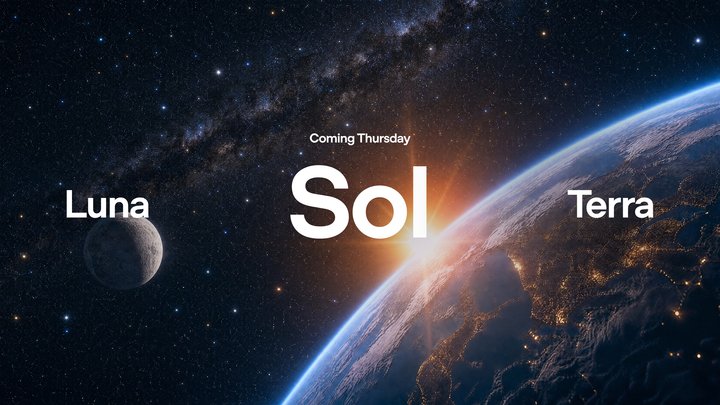
Aitoolsfi Summary:Model Diversification: OpenAI is shifting toward a multi-model release strategy to address distinct performance tiers simultaneously.
Deployment Strategy: The simultaneous launch of Sol, Terra, and Luna suggests a modular approach to scaling model capabilities for different user segments.
Market Velocity: Rapid, multi-model rollouts signal a transition toward high-frequency product cycles that prioritize immediate global access over traditional staged testing.
Source: OpenAI
4. Elon Musk and Cursor to Release Open-Source AI Model
Hugging Face said in an official X post: Elon Musk and Cursor to Release Open-Source AI Model. Model availability, speed, and migration paths continue to change quickly across the AI stack. Pending updates remain directional signals until official documentation, availability details, or independent confirmation arrive.
Aitoolsfi Summary:Strategic Openness: Musk and Cursor are pivoting toward open-source distribution to directly challenge the rapid development pace of Chinese AI labs.
Ecosystem Integration: The collaboration leverages Cursor’s developer-centric environment to bypass traditional distribution hurdles and accelerate immediate model adoption.
Hugging Face market Velocity: This move signals a shift toward rapid, high-frequency releases as the primary competitive lever for frontier model developers.
Source: Hugging Face
5. Microsoft Integrates Hugging Face Models Into Azure Foundry
Hugging Face said in an official X post: Microsoft and Hugging Face are bringing HF models to Foundry Managed Compute. The real signal is not hosting. It is Microsoft pushing deeper into the place where model selection,. Model availability, speed, and migration paths continue to change quickly across the AI stack. Pending updates remain directional signals until official documentation, availability details, or independent confirmation arrive.
Aitoolsfi Summary:Platform Consolidation: Microsoft is shifting its strategy to capture the developer workflow by embedding open-source model selection directly into Azure Foundry.
Managed Compute: The integration leverages Foundry Managed Compute to streamline the deployment of Hugging Face models within existing enterprise cloud environments.
Ecosystem Friction: This move signals a broader industry trend toward reducing migration overhead as cloud providers compete to become the default home for open-weights models.
Source: Hugging Face
6. MiniMax and Kimi models compete on Kilo WorldCupBench
MiniMax said in an official X post: Kickoff. Let’s see if M3 can bring it home. Kilo Are open-weight models from and making better predictions than you are about the #worldcup. The update extends xAI's coding model into another agentic development environment, which keeps competitive pressure on IDE and CLI-based coding assistants. Coding agents are moving into daily engineering environments where trust, context handling, and workflow fit decide adoption.

Aitoolsfi Summary:Predictive Benchmarking: MiniMax is shifting model evaluation toward real-time event forecasting to test reasoning capabilities beyond static datasets.
Competitive Dynamics: The Kilo WorldCupBench serves as a public arena for MiniMax and Kimi to demonstrate predictive accuracy against live, unpredictable outcomes.
Market Differentiation: Live-event benchmarks signal a transition toward models that prioritize temporal awareness and dynamic data processing over traditional static benchmarks.
Source: MiniMax
7. From Application-Layer Simulation to Native Meta-Architecture: Structural Tension as an Endogenous Driver for
arXiv API published an update: Current large language models (LLMs) are fundamentally stateless: their behavior is fully determined by input at inference time, and any higher-order cognitive architecture must be. Meta's subscription rollout shows major consumer platforms testing how AI features can fit into paid bundles for creators, businesses, and everyday users. AI is becoming a packaging lever inside broader social, creator, and business subscriptions rather than only a standalone product.
Aitoolsfi Summary:Stateless Limitation: Current LLMs rely entirely on inference-time input, creating a structural barrier for persistent, long-term cognitive reasoning.
Architectural Shift: Moving beyond stateless models requires integrating native meta-architectures that manage state outside of standard prompt-response cycles.
System Evolution: Future model development will prioritize internal memory and state management to overcome the limitations of current stateless inference patterns.
Source: arXiv API
8. Meta just launched a new AI generator, Muse Image, and users are already pushing back over use of their photos
TechCrunch reports: The new image-generating model has numerous use cases, including advertising and decorating, and creator-based opportunities. Meta's subscription rollout shows major consumer platforms testing how AI features can fit into paid bundles for creators, businesses, and everyday users. AI is becoming a packaging lever inside broader social, creator, and business subscriptions rather than only a standalone product.

Aitoolsfi Summary:Data Friction: Meta faces immediate user backlash as the integration of personal photos into training sets triggers privacy concerns.
Model Training: The Muse Image generator leverages existing platform content to fuel its creative output for advertising and design tools.
Platform Trust: Aggressive data utilization for generative models risks alienating the core user base that Meta relies on for content.
Source: TechCrunch
Summary
Meta, OpenAI, Hugging Face, and MiniMax show a market moving past novelty and into operational pressure. The most important AI updates now sit around deployment boundaries: who can access a model, which tools an agent can call, how performance is measured in real tasks, and whether the business case is strong enough to justify production use.