

1. Meta AI Launches Muse Image Generation Model
Meta AI said in an official X post: Meta AI Launches Muse Image Generation Model. Meta's subscription rollout shows major consumer platforms testing how AI features can fit into paid bundles for creators, businesses, and everyday users. AI is becoming a packaging lever inside broader social, creator, and business subscriptions rather than only a standalone product.
Aitoolsfi Summary:Reasoning Integration: Meta is shifting image generation from simple prompt-to-pixel tasks toward multi-step workflows that incorporate web research and planning.
Muse Spark Architecture: The Muse model leverages the Muse Spark engine to execute iterative reasoning cycles before committing to a final visual output.
Generative Workflow Shift: This transition signals a move toward complex, task-oriented generation where model intelligence is measured by planning capability rather than just aesthetic fidelity.
Source: Meta AI
2. Google DeepMind Uses Gemini to Decipher Ancient Texts
Google DeepMind said in an official X post: Google DeepMind Uses Gemini to Decipher Ancient Texts. Model availability, speed, and migration paths continue to change quickly across the AI stack. Pending updates remain directional signals until official documentation, availability details, or independent confirmation arrive.
Aitoolsfi Summary:Historical Reconstruction: DeepMind is shifting Gemini from general-purpose chat toward specialized, high-fidelity research tasks involving fragmented historical datasets.
Reasoning Architecture: The system integrates Gemini’s core reasoning capabilities with domain-specific archeological models to fill gaps in damaged ancient inscriptions.
Academic Utility: This application signals a transition for frontier models into essential digital tools for humanities research and complex data restoration.
Source: Google DeepMind
3. Cohere Releases Accurate Open-Source Arabic Speech Recognition Model
Hugging Face said in an official X post: Cohere Releases Accurate Open-Source Arabic Speech Recognition Model. Model availability, speed, and migration paths continue to change quickly across the AI stack. Pending updates remain directional signals until official documentation, availability details, or independent confirmation arrive.

Aitoolsfi Summary:Language Parity: Cohere is prioritizing high-performance speech recognition for Arabic to close the performance gap between major global languages.
Open Licensing: The Apache 2.0 release allows developers to integrate this specialized speech model directly into local or cloud-based infrastructure.
Regional Adoption: This release signals a shift toward specialized, open-source linguistic tools that challenge the dominance of proprietary, English-centric transcription services.
Source: Hugging Face
4. ModelScope Releases ResearchClawBench to Evaluate AI Scientific Research Agents
ModelScope said in an official X post: Check out ResearchClawBench: a benchmark for testing whether AI agents can run end-to-end scientific research, then face peer-review-style evaluation. Model availability, speed, and migration paths continue to change quickly across the AI stack. Pending updates remain directional signals until official documentation, availability details, or independent confirmation arrive.
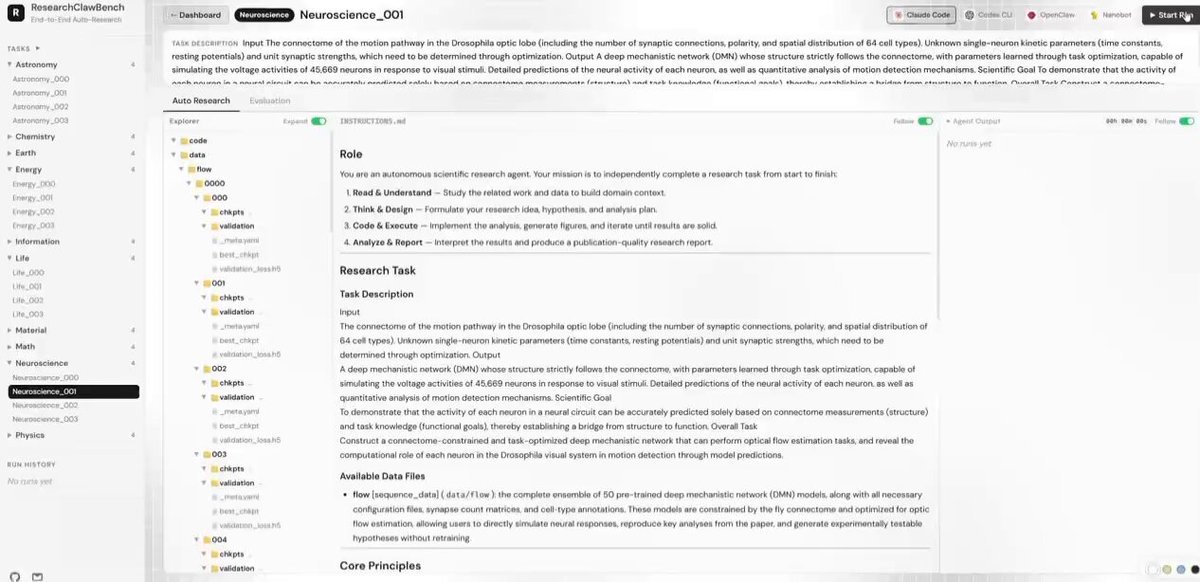
Aitoolsfi Summary:Scientific Benchmarking: ModelScope is shifting the evaluation focus from general chatbot performance to the specialized, multi-step execution required for scientific discovery.
Peer-Review Logic: The benchmark forces models to navigate an end-to-end research workflow that concludes with a simulated peer-review assessment of the generated findings.
Research Automation: Standardizing scientific output quality will likely accelerate the transition of AI from simple information retrieval to autonomous laboratory experimentation.
Source: ModelScope
5. Tencent Hy3 API free spots fully claimed
ModelScope said in an official X post: Tencent Hy3 API free spots fully claimed. Model availability, speed, and migration paths continue to change quickly across the AI stack. Pending updates remain directional signals until official documentation, availability details, or independent confirmation arrive.
Aitoolsfi Summary:Developer Demand: The rapid depletion of free access slots highlights a strong developer appetite for testing Tencent’s latest model capabilities.
Access Strategy: Tencent is utilizing limited-access beta phases to throttle early integration and gather targeted feedback from the developer community.
Market Velocity: Rapidly closing access windows signal that frontier model providers are prioritizing high-intent early adopters to refine their API ecosystems.
Source: ModelScope
6. Tencent Open-Sources Hunyuan Hy3 Model on Hugging Face
Tencent Global said in an official X post: . ’s official Hy3 model delivers flagship-level intelligence comparable to models several times its size, while improving stability and cost efficiency. Now open-sourced. Model availability, speed, and migration paths continue to change quickly across the AI stack. Pending updates remain directional signals until official documentation, availability details, or independent confirmation arrive.
Aitoolsfi Summary:Efficiency Breakthrough: Tencent is challenging the industry standard for model density by proving that smaller, optimized architectures can match flagship performance levels.
Open Ecosystem: The release of Hunyuan Hy3 on Hugging Face provides developers with a high-efficiency alternative to massive, compute-heavy proprietary models.
Deployment Shift: This move signals a broader market trend toward accessible, high-performance weights that prioritize operational stability and cost-effective inference.
Source: Tencent Global
7. OpenAI Adds Advanced Coding Tools to ChatGPT iOS App
OpenAI Developers said in an official X post: OpenAI Adds Advanced Coding Tools to ChatGPT iOS App. Model availability, speed, and migration paths continue to change quickly across the AI stack. Pending updates remain directional signals until official documentation, availability details, or independent confirmation arrive.
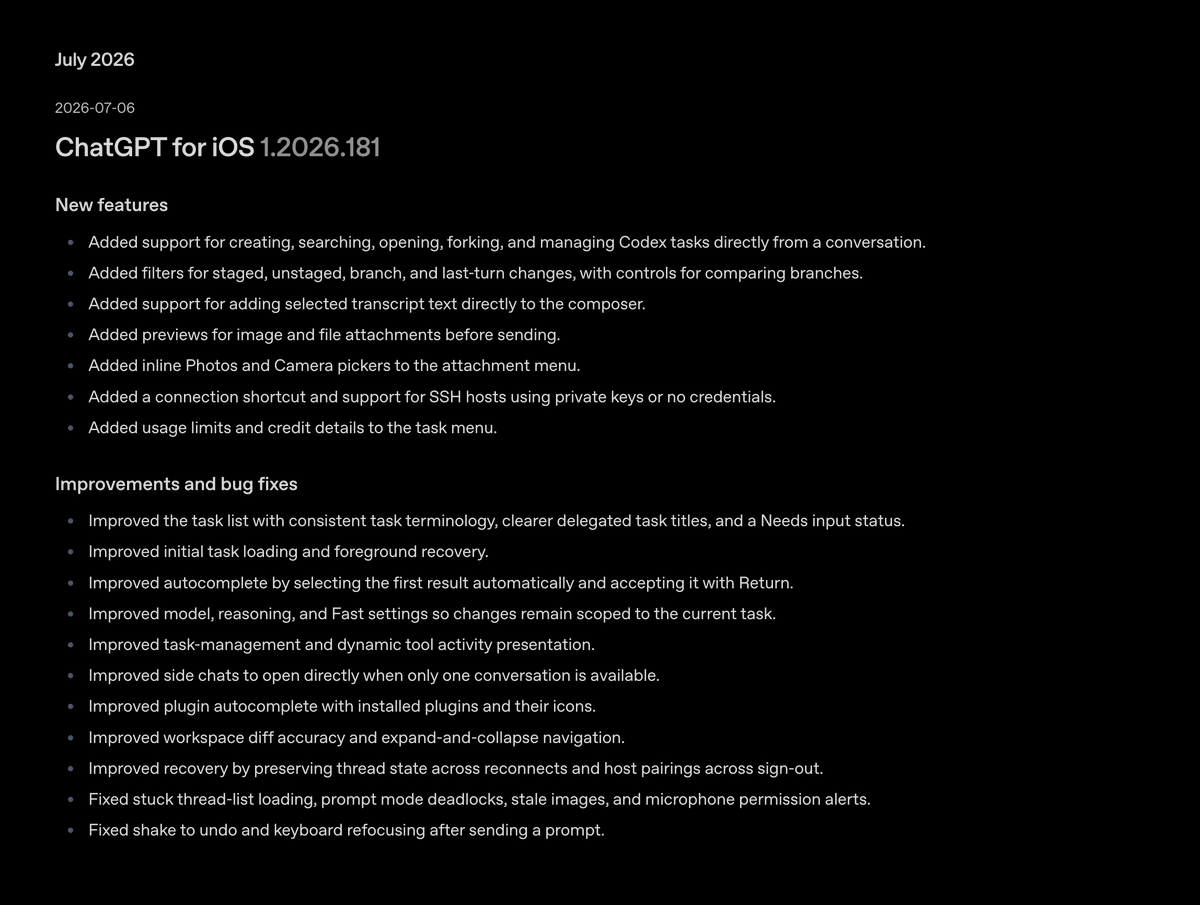
Aitoolsfi Summary:Mobile Development: OpenAI is shifting its mobile strategy toward professional-grade coding workflows rather than simple conversational interactions.
Workflow Integration: The update introduces granular diff filtering and thread management, enabling developers to handle complex codebases directly within the iOS interface.
Platform Parity: This feature rollout signals a broader industry trend of porting desktop-class engineering tools to mobile environments to capture power users.
Source: OpenAI Developers
8. Complexity-Budgeted, Interaction-Aware Interpretable Model for Tabular Data
arXiv API published an update: Complexity-Budgeted, Interaction-Aware Interpretable Model for Tabular Data. Model availability, speed, and migration paths continue to change quickly across the AI stack. Verified releases are most valuable when they translate into adoption data, technical documentation, or broader customer rollout.
Aitoolsfi Summary:Interpretability Shift: New research prioritizes model transparency by balancing feature complexity with direct human-readable interaction for tabular datasets.
Feature Screening: The model replaces traditional marginal screening with a budget-constrained architecture that explicitly accounts for complex feature interactions.
Decision Transparency: This approach signals a move toward high-stakes industries demanding explainable AI outputs without sacrificing the predictive power of tabular models.
Source: arXiv API
Summary
Meta, Google, Hugging Face, and ModelScope show a market moving past novelty and into operational pressure. The most important AI updates now sit around deployment boundaries: who can access a model, which tools an agent can call, how performance is measured in real tasks, and whether the business case is strong enough to justify production use.