
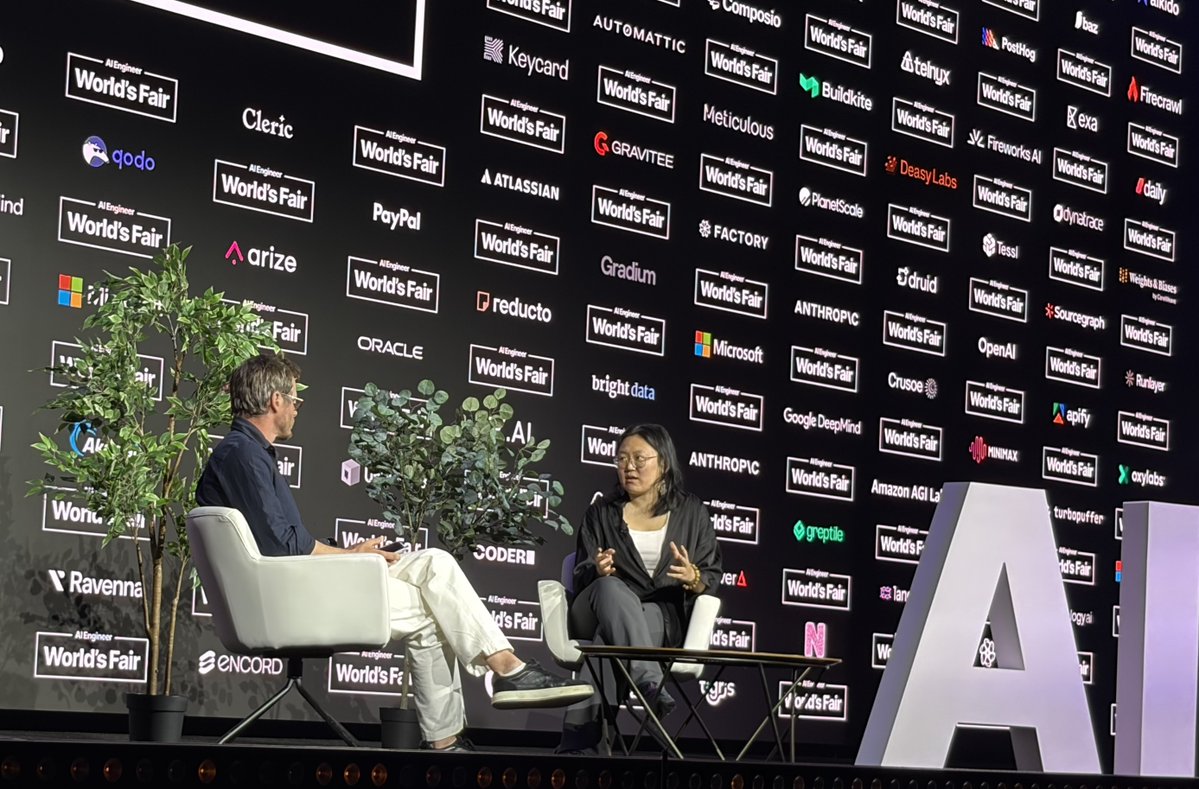
1. MiniMax Reveals M3 Model Details and Future Roadmap
MiniMax said in an official X post: MiniMax Reveals M3 Model Details and Future Roadmap. Model availability, speed, and migration paths continue to change quickly across the AI stack. Pending updates remain directional signals until official documentation, availability details, or independent confirmation arrive.
Aitoolsfi Summary:Architecture Innovation: MiniMax is prioritizing architectural efficiency by integrating sparse attention mechanisms developed through internal research cycles.
Deployment Strategy: The M3 roadmap signals a shift toward open-weight distribution to accelerate developer adoption and platform integration.
Market Positioning: MiniMax is moving to challenge established frontier models by emphasizing rapid iteration and accessible model weights.
Source: MiniMax
2. MiniMax Releases 400B Parameter M3 Multimodal Model
MiniMax said in an official X post: Finallyyy with Zach Mueller New model card up, M3! (Working through the Colorado backlog) At 400B+ parameters, using the unquantized weights ends. Model availability, speed, and migration paths continue to change quickly across the AI stack. Pending updates remain directional signals until official documentation, availability details, or independent confirmation arrive.
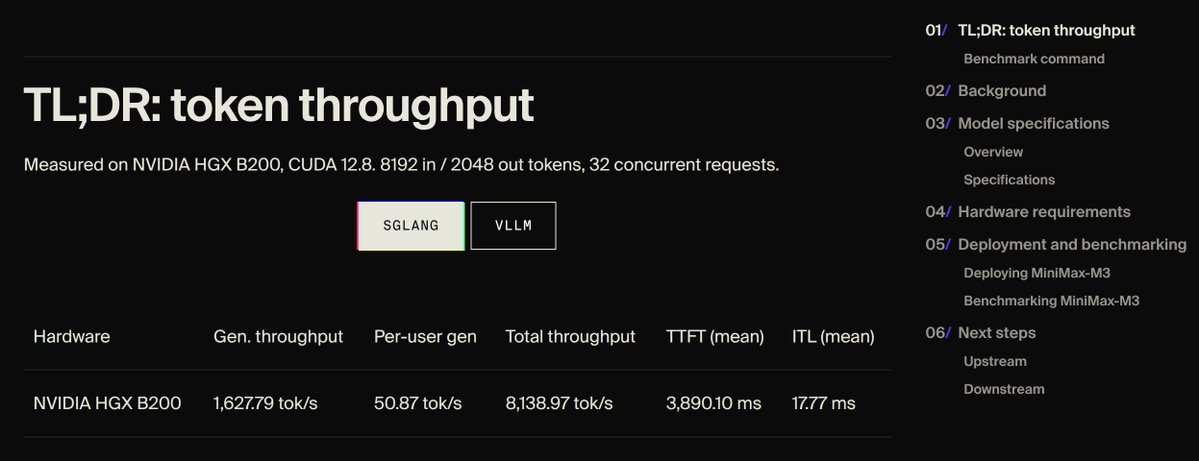
Aitoolsfi Summary:Model Scaling: MiniMax is pushing into the ultra-large parameter class with its new 400B M3 multimodal architecture.
Hardware Constraints: The massive parameter count effectively ends the era of running unquantized weights on standard local developer hardware.
Deployment Reality: High-parameter models are shifting the industry focus toward cloud-native API access over local model execution for high-end performance.
Source: MiniMax
3. Runway Integrates Gemini Omni Flash for Video Generation
Runway said in an official X post: Generate and edit video with Gemini Omni Flash, now in Runway. Start with a prompt, image or video and create anything you can imagine. Get started at the link below or ask Agent to use. Model availability, speed, and migration paths continue to change quickly across the AI stack. Pending updates remain directional signals until official documentation, availability details, or independent confirmation arrive.

Aitoolsfi Summary:Model Integration: Runway is shifting toward a multi-model strategy by incorporating Google’s Gemini Omni Flash into its video generation pipeline.
Workflow Expansion: Users can now leverage Gemini’s multimodal capabilities to process image and video inputs directly within Runway’s creative editing environment.
Ecosystem Velocity: The rapid adoption of Gemini Omni Flash signals a trend where specialized video platforms prioritize model interoperability to maintain competitive feature sets.
Source: Runway
4. Anthropic Launches Agentic Claude Sonnet 3.5
Anthropic said in an official X post: Introducing Claude Sonnet 5, our most agentic Sonnet yet. It makes plans, uses tools like browsers and terminals, and runs autonomously at a level that just a few months ago required. Model availability, speed, and migration paths continue to change quickly across the AI stack. Pending updates remain directional signals until official documentation, availability details, or independent confirmation arrive.

Aitoolsfi Summary:Autonomous Capability: Anthropic is shifting the benchmark for Claude from static text generation to active, multi-step task execution.
Tool Integration: The updated Sonnet model gains native proficiency in navigating browser environments and terminal interfaces to complete complex workflows.
Operational Shift: This evolution signals a move toward models that function as primary operators rather than mere conversational assistants.
Source: Anthropic
5. Google DeepMind Enables Sequential Model Chaining via Interactions API
Google DeepMind said in an official X post: Pair these models together using the Interactions API. Quickly generate an image with Nano Banana 2 Lite, then immediately animate it using Gemini Omni Flash. Plus, you can maintain. Google's Nano Banana models moving into AI Studio and Gemini Enterprise makes image generation more directly available to developers and businesses. Image generation is becoming a platform feature inside enterprise agent stacks rather than a separate consumer-facing novelty.
Aitoolsfi Summary:Pipeline Integration: Google is shifting from standalone model releases to a modular architecture that enables automated, multi-step creative workflows.
Interactions API: The new API allows developers to chain Nano Banana 2 Lite and Gemini Omni Flash for seamless image-to-animation processing.
Enterprise Automation: This capability signals a move toward embedding complex generative media tasks directly into standard business software stacks.
Source: Google DeepMind
6. Google DeepMind Releases Gemini Omni Flash and Nano Banana 2
Google DeepMind said in an official X post: Google DeepMind Releases Gemini Omni Flash and Nano Banana 2. Google's Nano Banana models moving into AI Studio and Gemini Enterprise makes image generation more directly available to developers and businesses. Image generation is becoming a platform feature inside enterprise agent stacks rather than a separate consumer-facing novelty.
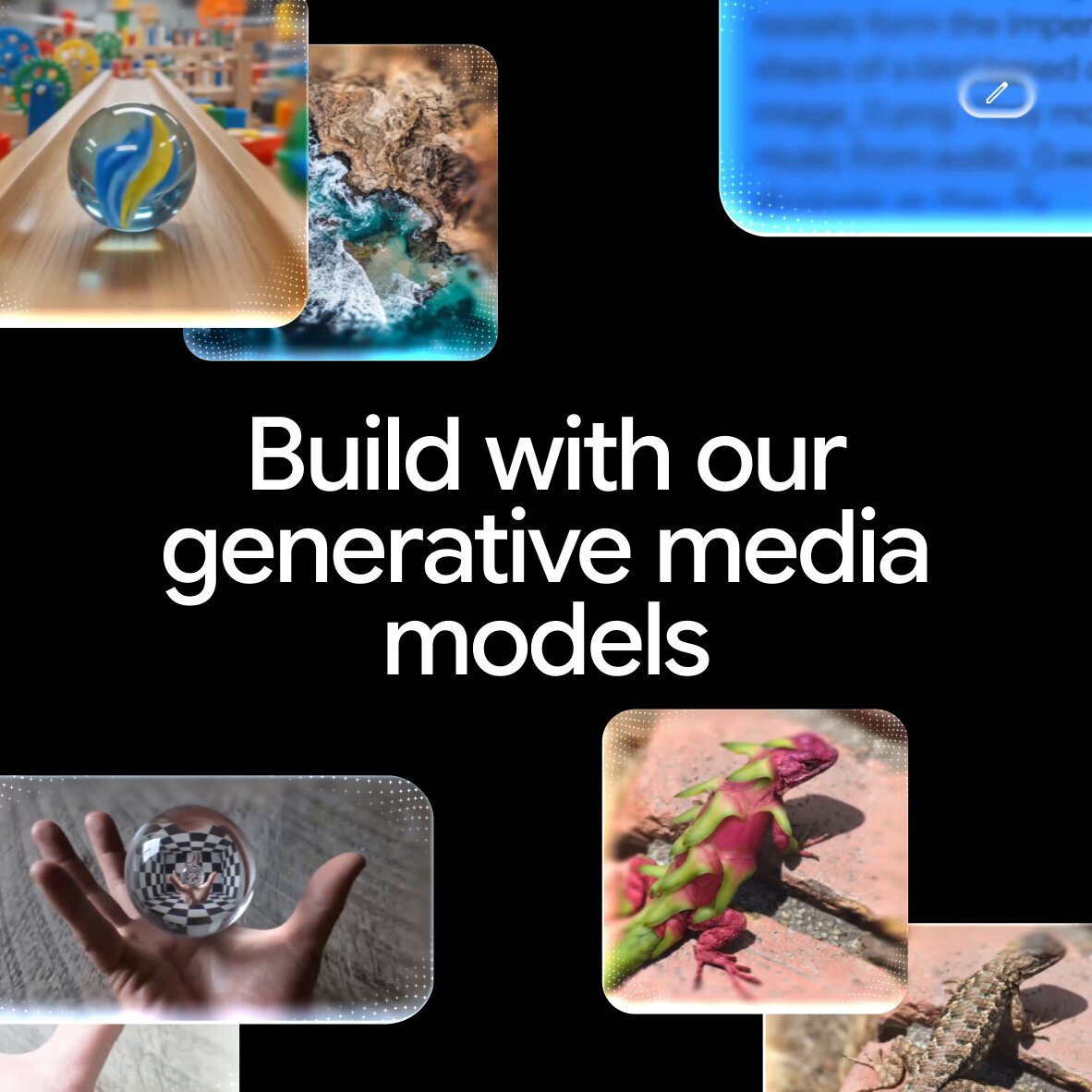
Aitoolsfi Summary:Platform Integration: Google is shifting image generation from experimental research into a core component of its developer and enterprise API stack.
Google deployment Strategy: General availability for Gemini Omni Flash and Nano Banana 2 removes friction for teams requiring stable, production-ready model access.
Workflow Evolution: High-speed image models are transitioning from standalone creative tools into embedded capabilities within standard enterprise software workflows.
Source: Google DeepMind
7. SenseNova releases open-source SenseNova-U1-8B-MoT-Infographic-V2 model
ModelScope said in an official X post: SenseNova releases open-source SenseNova-U1-8B-MoT-Infographic-V2 model. Model availability, speed, and migration paths continue to change quickly across the AI stack. Pending updates remain directional signals until official documentation, availability details, or independent confirmation arrive.
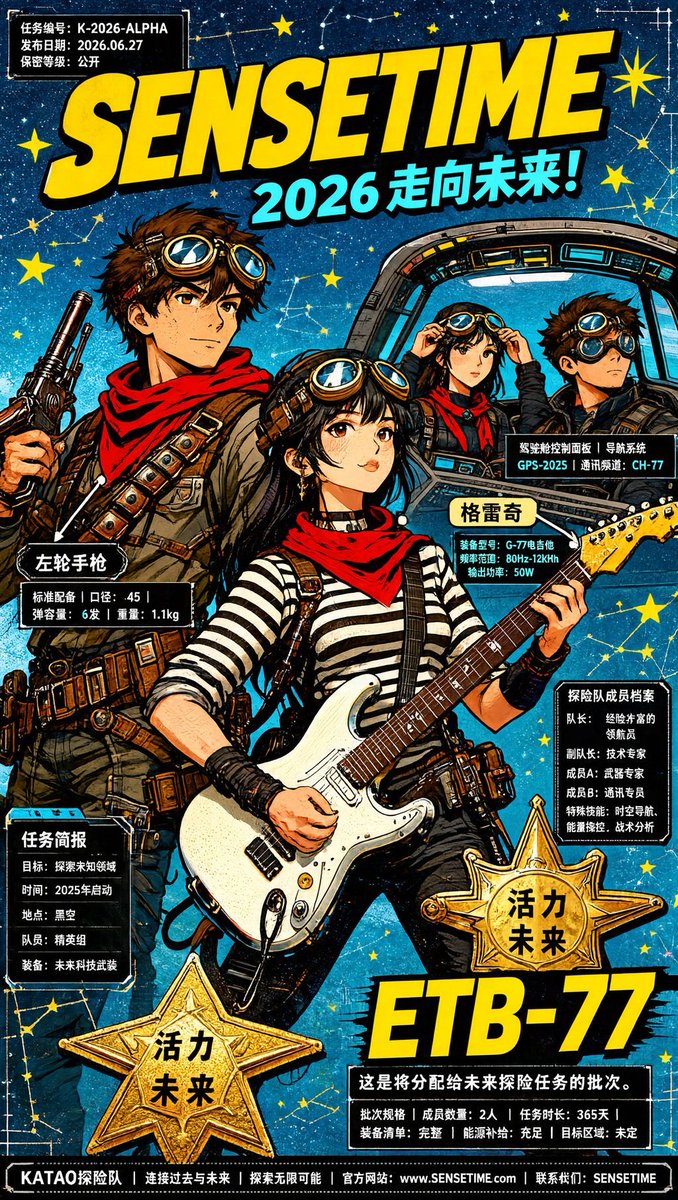
Aitoolsfi Summary:Specialized Architecture: SenseNova is pivoting toward high-density visual comprehension by optimizing its MoT architecture for complex infographic and text-heavy data parsing.
Open-Source Strategy: The release of the 8B parameter model signals a push to commoditize specialized vision-language tasks within the open-weight developer ecosystem.
Visual Benchmarking: This model forces a shift in performance standards for lightweight vision encoders, prioritizing layout-aware reasoning over general-purpose image recognition.
Source: ModelScope
8. ChatGPT: A study from @Stanford showed that 71.3% of chatgpt queries cou
Hugging Face said in an official X post: ChatGPT: A study from @Stanford showed that 71.3% of chatgpt queries cou. Model availability, speed, and migration paths continue to change quickly across the AI stack. Pending updates remain directional signals until official documentation, availability details, or independent confirmation arrive.
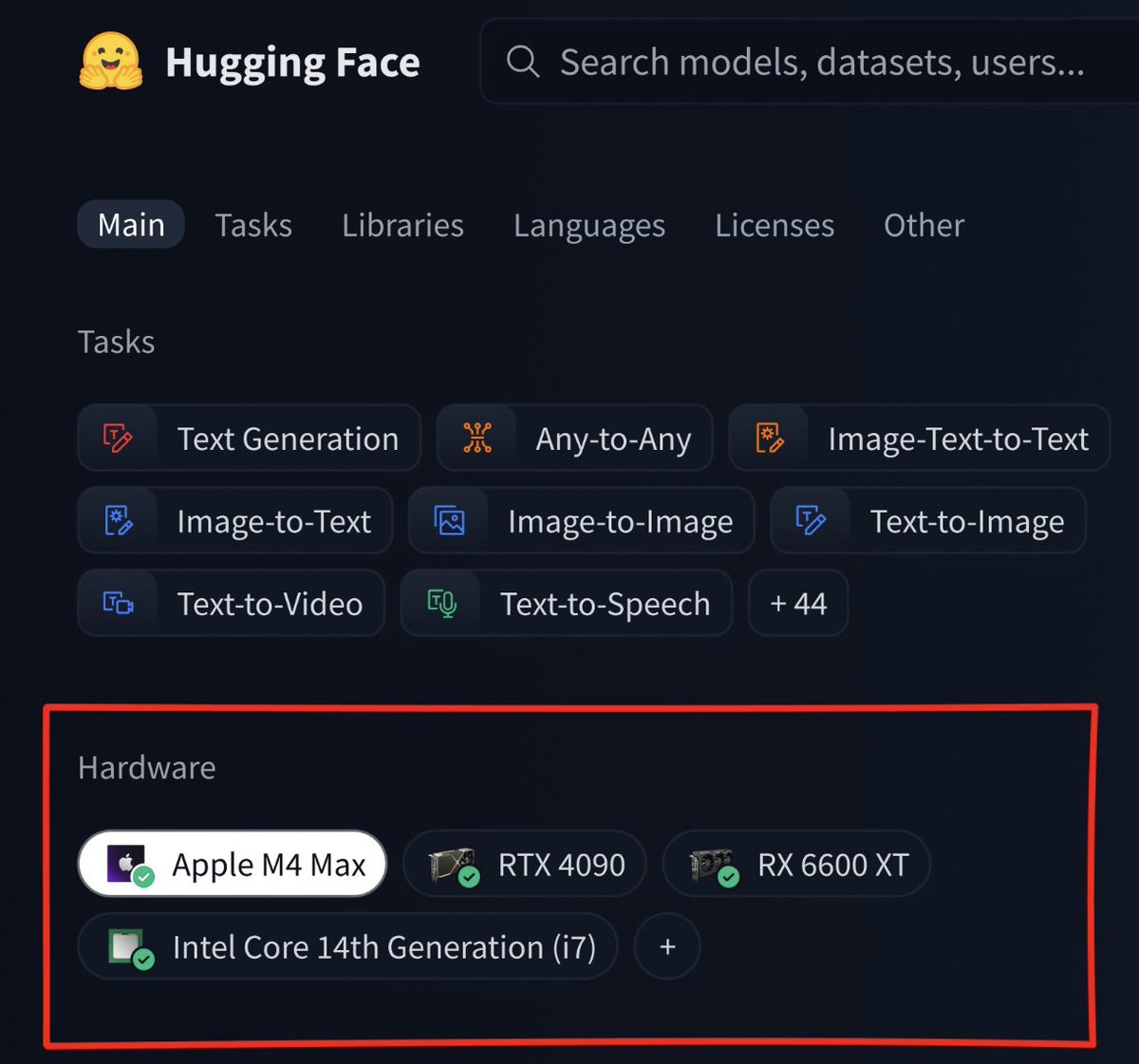
Aitoolsfi Summary:Efficiency Threshold: The majority of standard ChatGPT interactions are now well within the operational reach of lightweight, local LLMs.
Deployment Shift: Developers can offload routine query processing to local hardware, bypassing the latency and cost of cloud-based API calls.
Infrastructure Pivot: This performance parity signals a transition toward decentralized AI architectures where local execution becomes the default for enterprise workloads.
Source: Hugging Face
Summary
MiniMax, Anthropic, Google, and Hugging Face show a market moving past novelty and into operational pressure. The most important AI updates now sit around deployment boundaries: who can access a model, which tools an agent can call, how performance is measured in real tasks, and whether the business case is strong enough to justify production use.